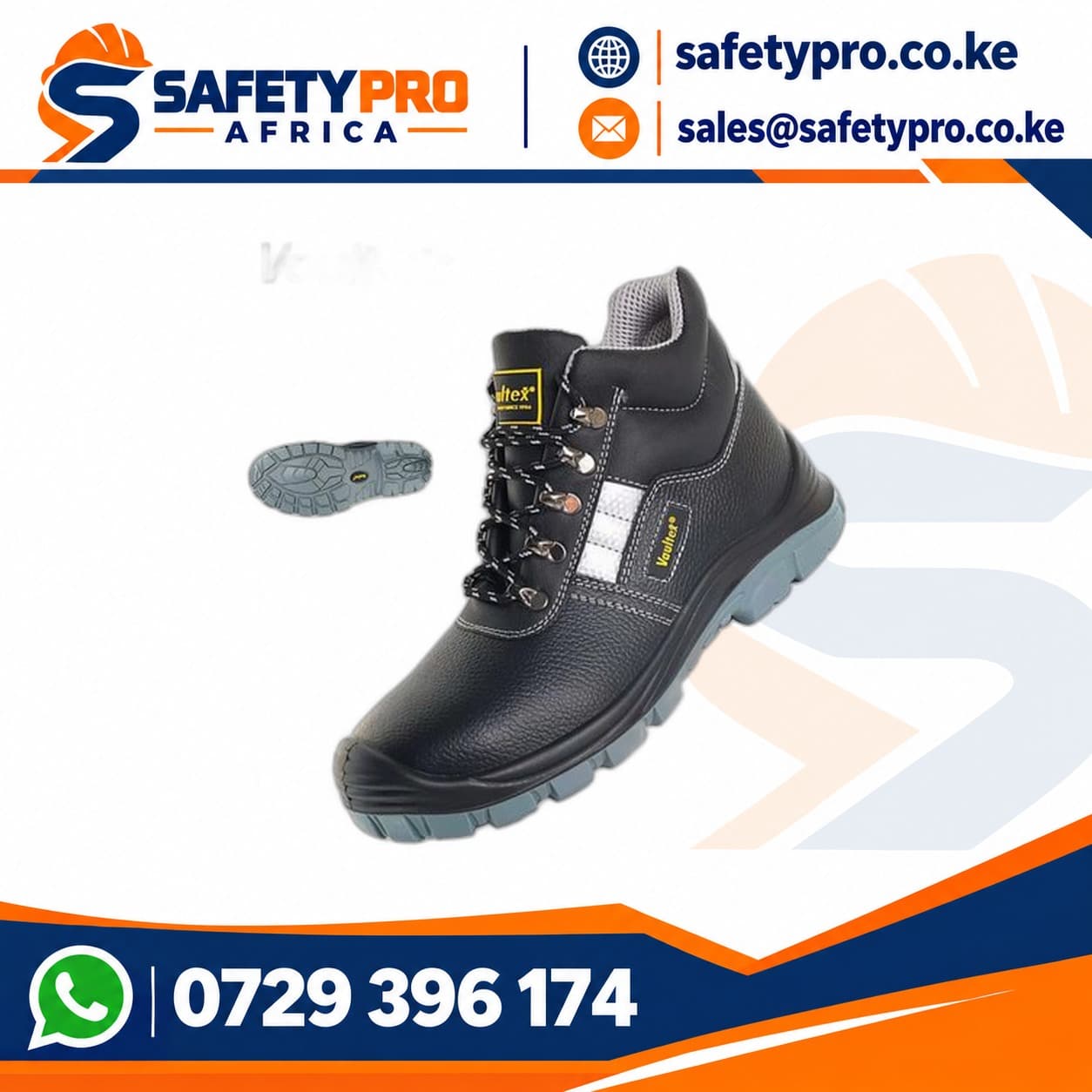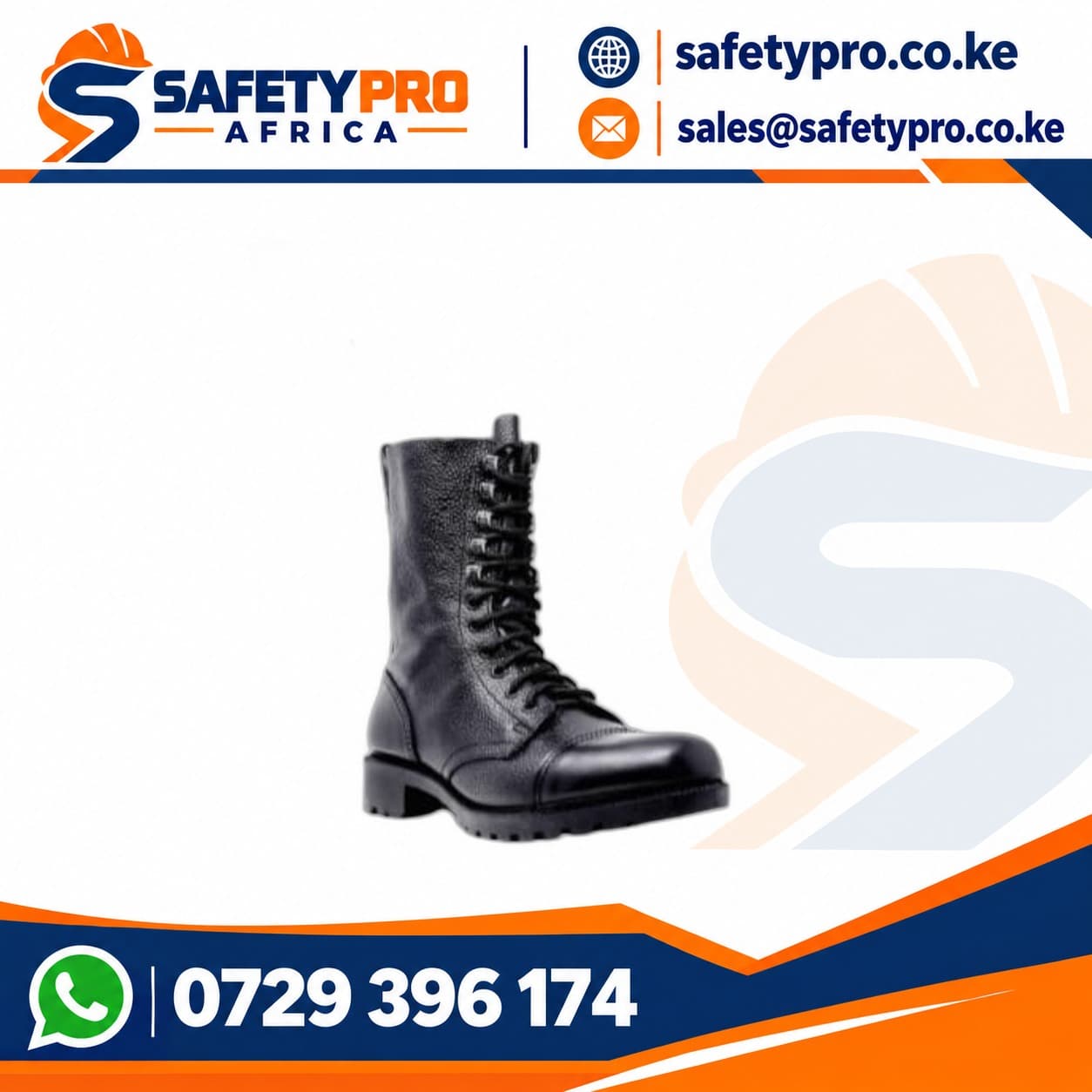
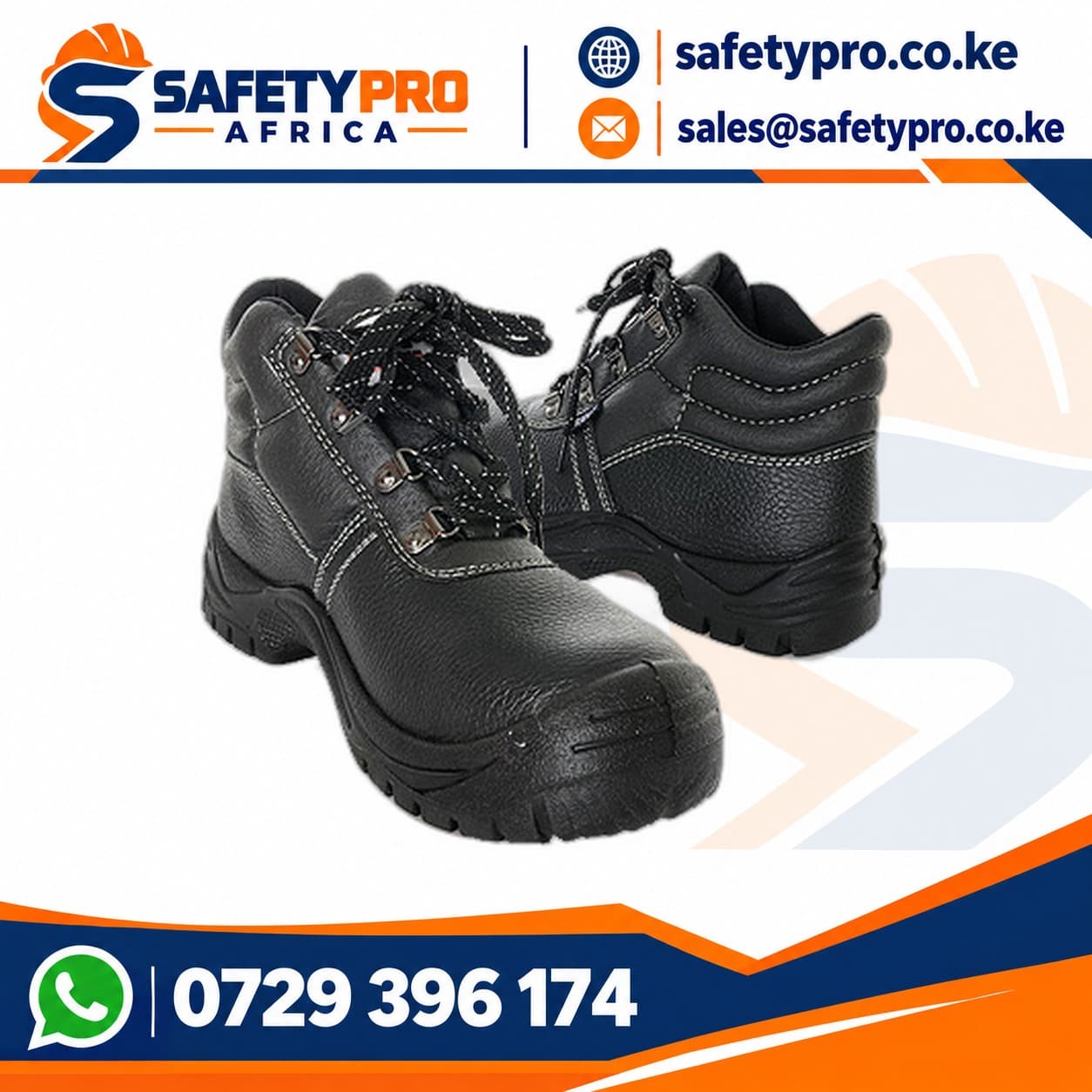
Under EN ISO 20345, all S-rated boots share a 200-joule toe cap. S1 adds antistatic and energy-absorbing heels. S2 adds a water-resistant upper. S3 adds a puncture-resistant midsole plus a cleated, oil-resistant outsole.
For Kenyan construction, flower-farm workshops and warehouses, S3 is the sensible default: nails, mesh offcuts and wet slabs are the everyday hazards. S1P (puncture plate, breathable upper) suits dry warehouses where water resistance is unnecessary.
Fit and socks decide comfort. Buy afternoon (feet swell), budget two pairs of moisture-wicking socks per worker, and replace boots when the tread wears smooth — most site boots last 6–12 months of daily use.